Showing posts with label clusiaceae. Show all posts

Garcinia spp.

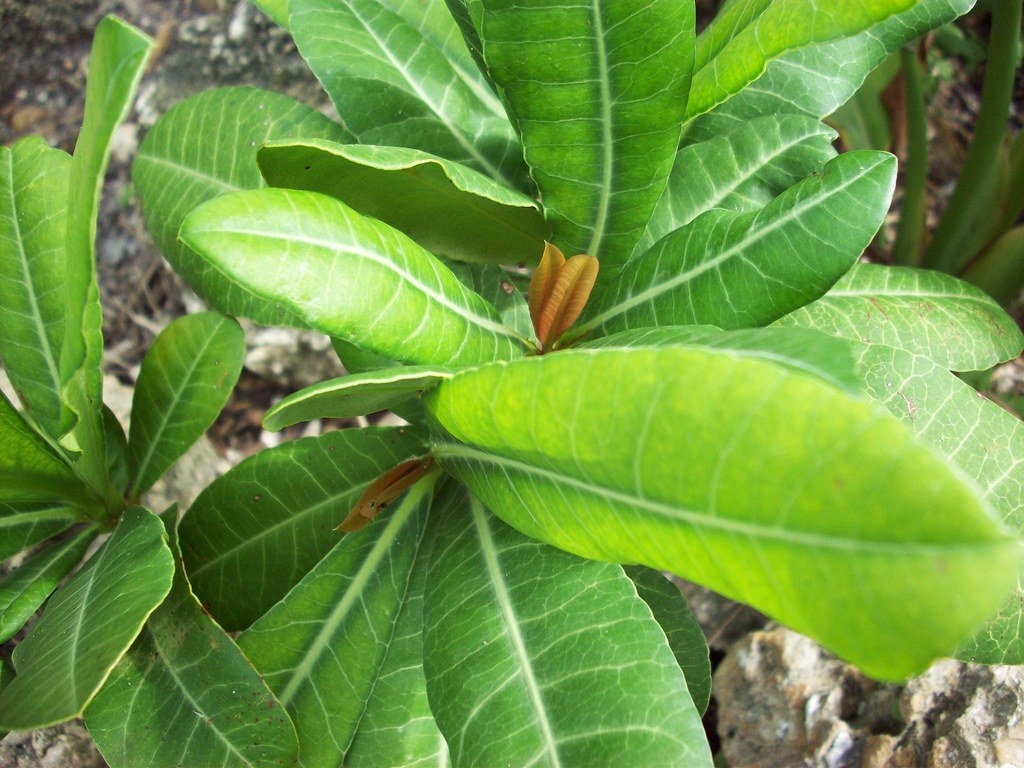
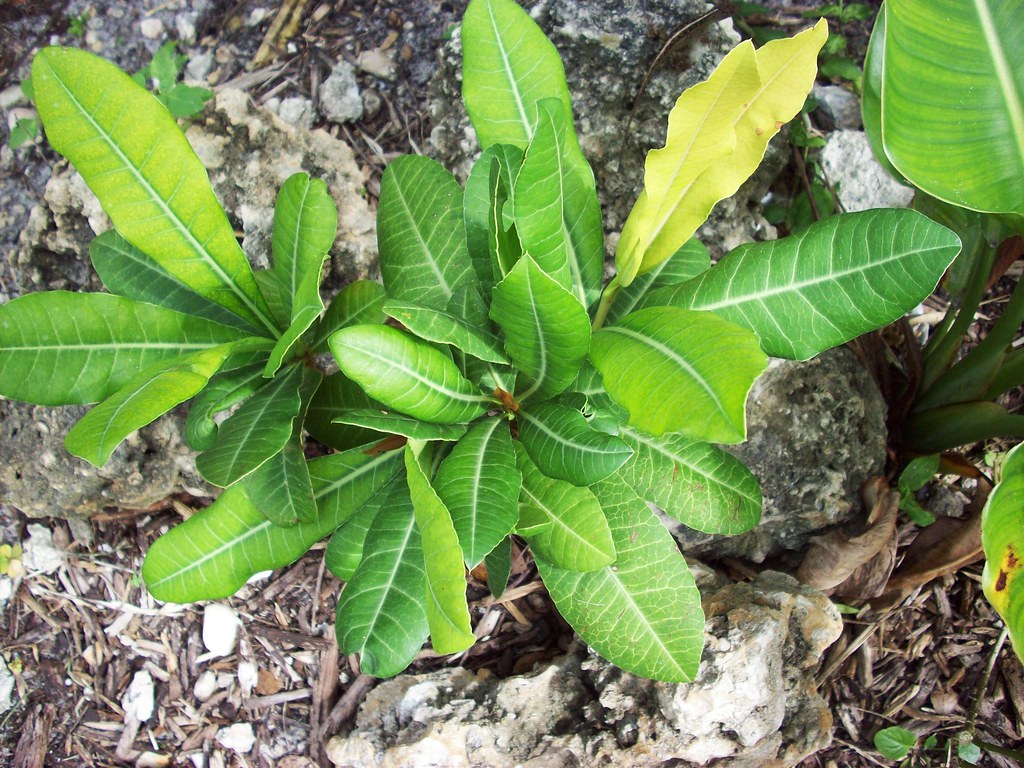
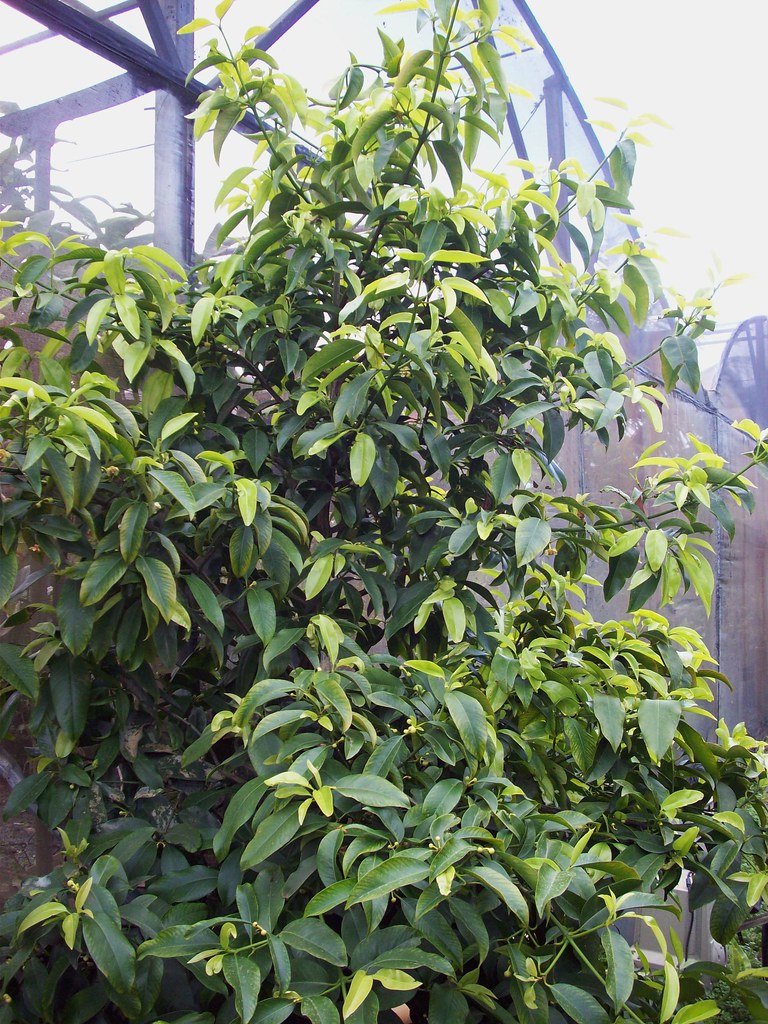
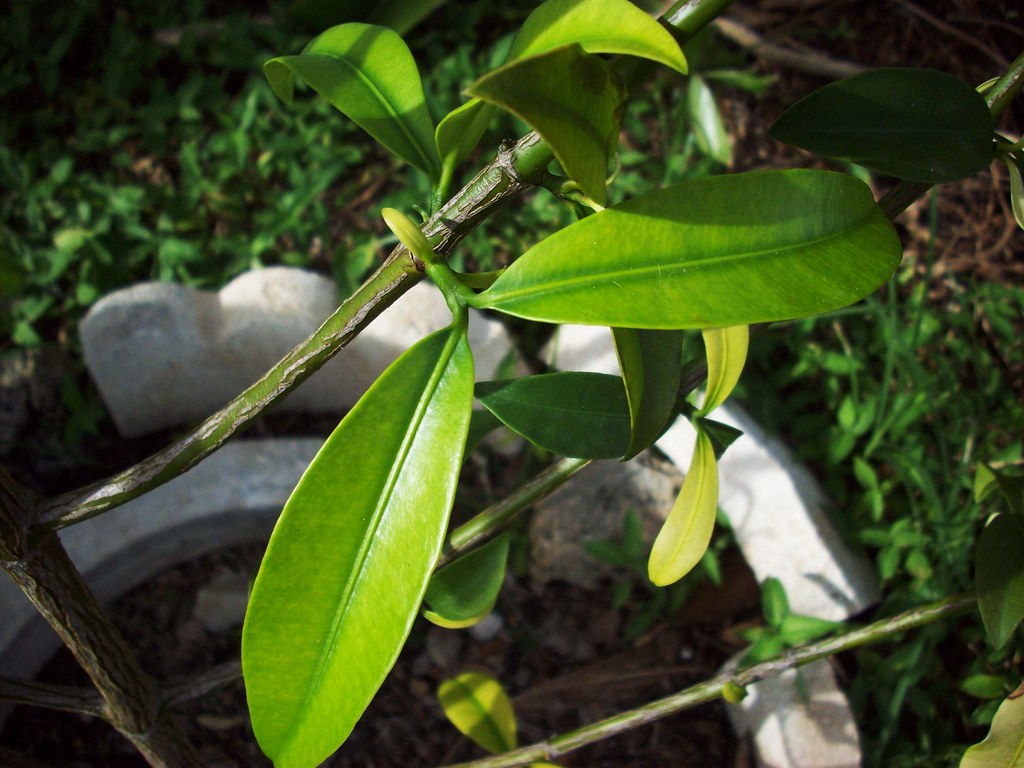
Garcinia intermedia

first two photos are of my G. intermedia seedling
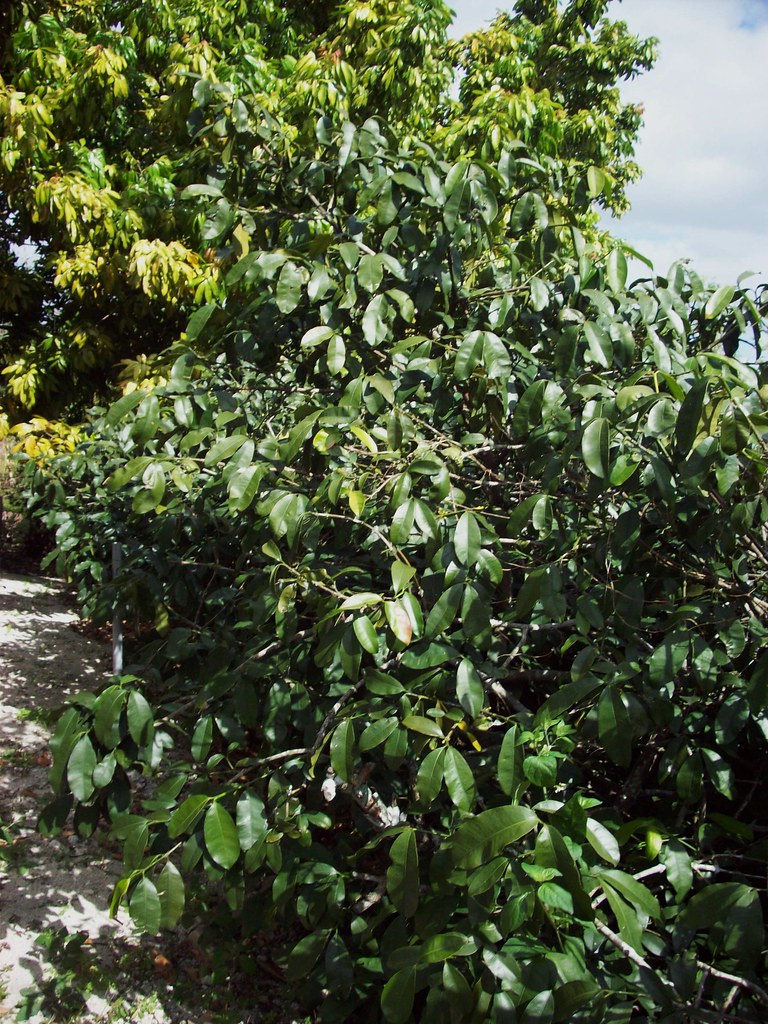
large shrub-like specimen G. intermedia @ the RFVC 208 garden

female? (not a 100% on this) flowers of G. intermedia @ the RFVC 208 garden
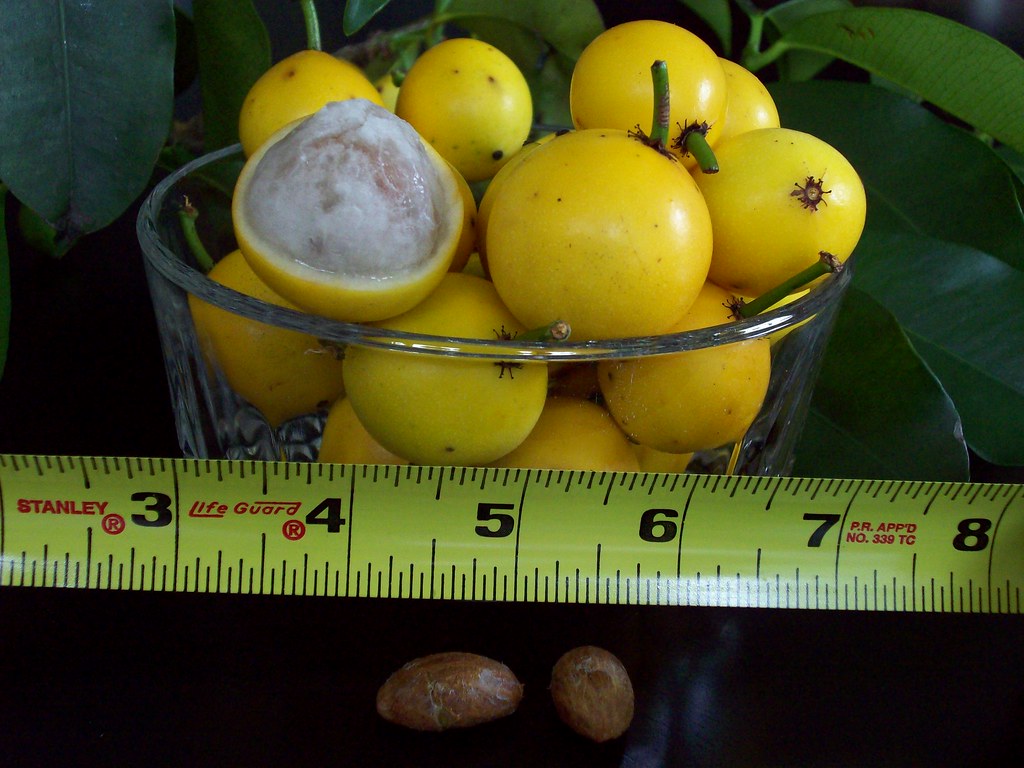

G. intermedia fruits, seeds & leaves.

Family: Clusiaceae •
Genus: Garcinia •
Species: intermedia (Pittier)Hammel •
Country of Origin: Central & South America •
Synonyms: Rheedia edulis •
Common Names: Lemon Drop Mangosteen, Mameyito •

I transplanted this last year and it has struggled every since. I feel terrible, it looks like Charlie Brown's Christmas tree! It also had a magnesium deficiency which I've since taken care of. You can see the deeper green coming back. This fruit reminds me of a childhood favorite Lemonhead™ candy. I can't wait till it fruits. It could be a while because it is not happy with me!
Update 2-16-2009 I have three more seedlings growing now!!!

The elegant, erect tree, ranging up to 100' (note from Eric: I'm not sure the ultimate height for this tree is correct as information varies, the one at the RFVC 208 garden is barely 10' high, so for now I'll stick with J. Morton, but I'd venture to say it is more like 20' or 30' high ultimately) has copious gummy, yellow latex and opposite, short-petioled, thick, leathery, elliptic-oblong or elliptic-lanceolate leaves, 3 3/16" to 6" long, 3/4" to 2" wide, or much larger, with numerous lateral veins conspicuous on both surfaces; dark-green above, pale or brownish on the underside. Young foliage is reddish. The small, greenish-white or ivory flowers, densely clustered below the leaves, are 4-petalled, the male with 25 to 30 stamens, the perfect with 10 to 12.

The fruit is oval or oblong, 3/4" to 1 1/4" long, smooth, orange or yellow, the thin, soft skin easily peeled. There is a little flesh, sweet or acid, adhering to the 1 or 2 seeds.
excerpt from http://www.hort.purdue.edu/newcrop/morton/bakupari_ars.html

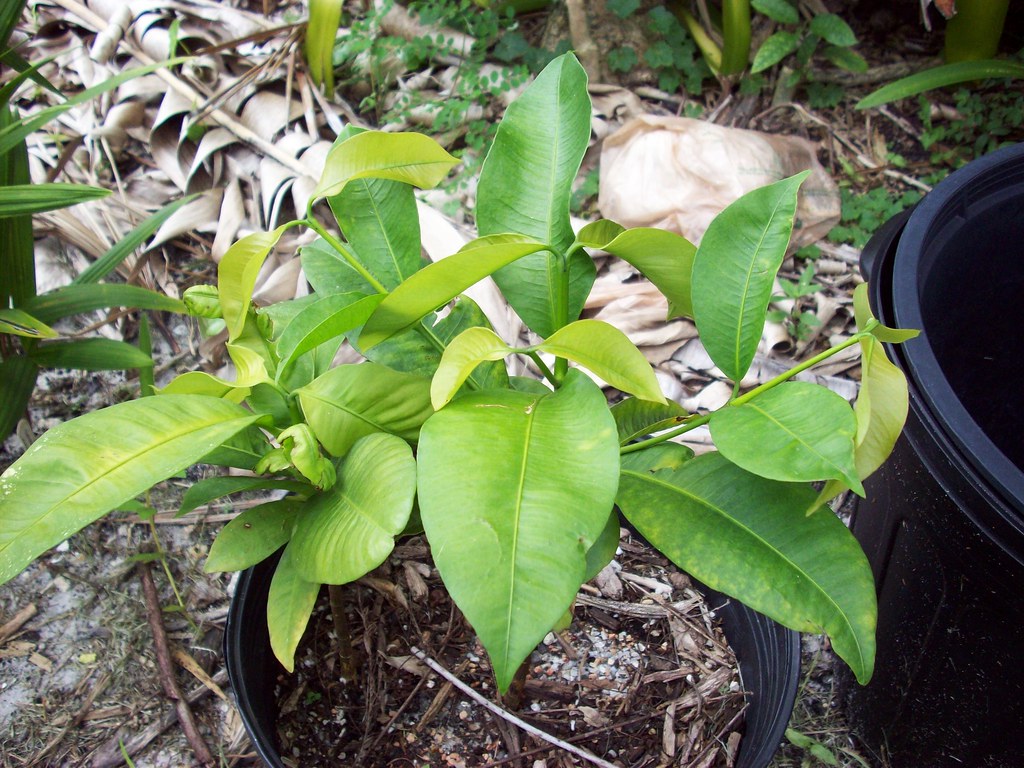
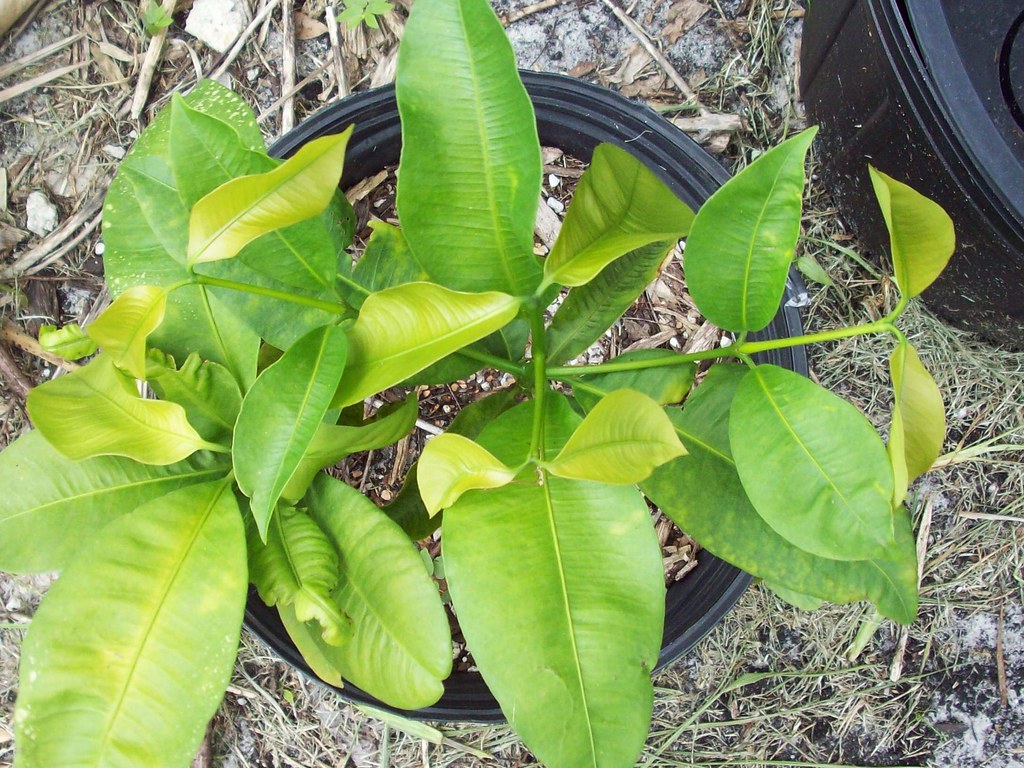
Garcinia livingstonei
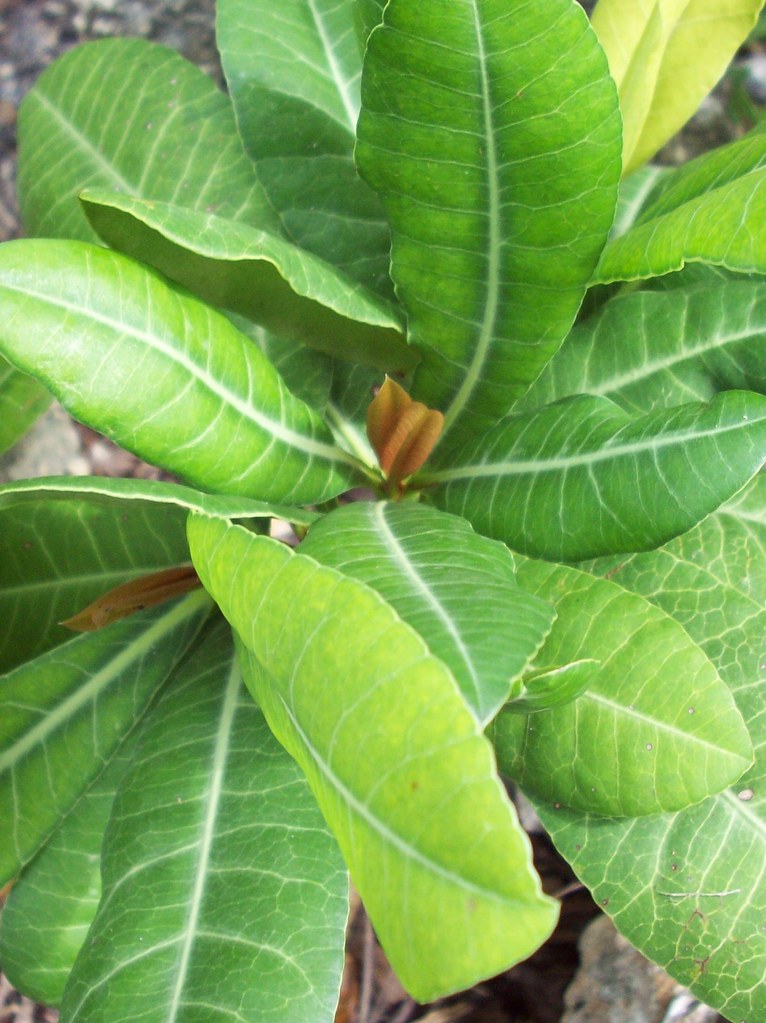

first three photos are of my G. livingstonei seedlings

female flowers of G. livingstonei @ the RFVC 208 garden
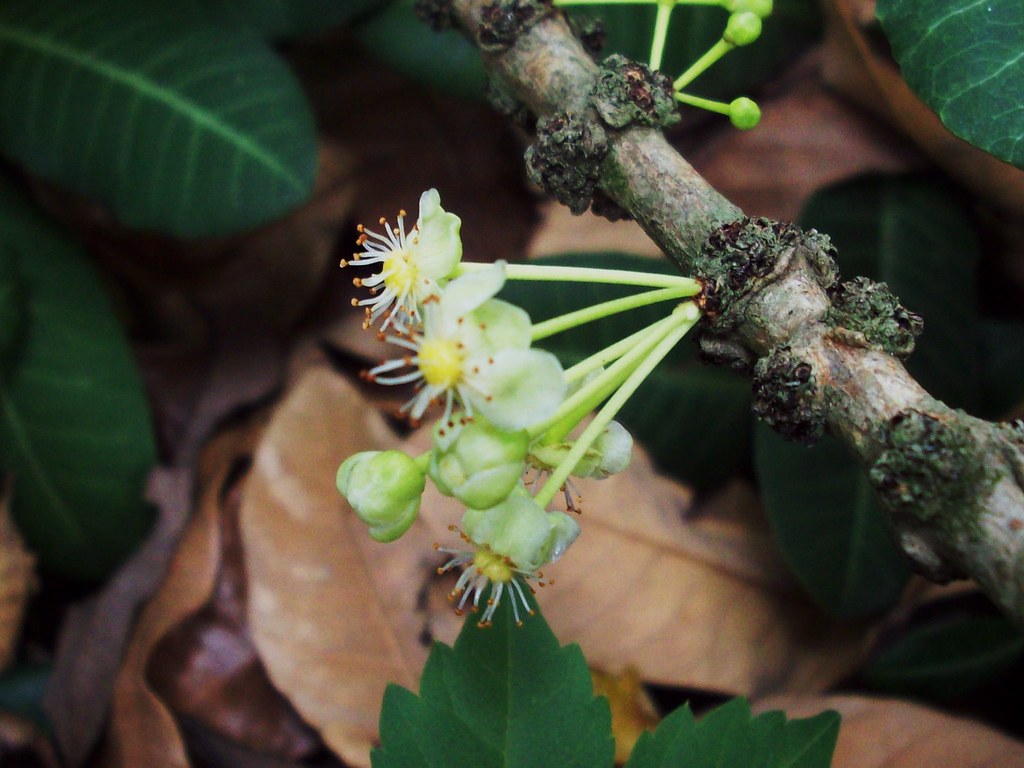
male flowers of G. livingstonei @ the RFVC 208 garden
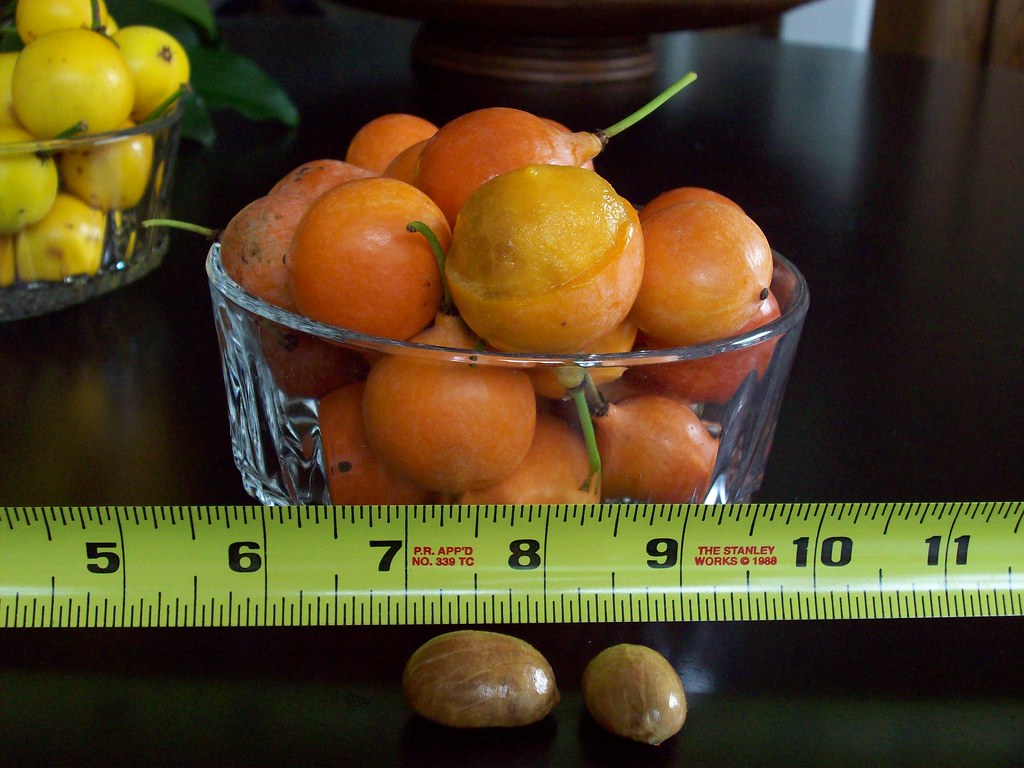
G. livingstonei fruits & seeds


Family: Clusiaceae •
Genus: Garcinia •
Species: livingstonei (T. Anderson) •
Country of Origin: Africa •
Synonyms: •
Common Names: Imbe, African Mangosteen •

All these Garcinia spp. are grown from seeds. They start off real slowwwwwwwwww, but they're growing good now. Another tasty Garcinia sp. Definitely has a lemony flavor like most of these species described here.

Even without their fruits, these highly ornamental trees are good to have around. Seen in profile, they frequently divide near the ground into three or four upright, outward-curving trunks that carry short, stiff, lateral branches. They can reach 30' in height, but are normally much less. The new shoots grow in whorls (verticils) of three and emerge at an acute angle from the stem, giving the tree its characteristic asymmetry and crooked form.(1) Leaves usually 3 in a whorl (may be 4 or opposite), variable in shape but usually egg- or lance-shaped, generally 2 1/2"–4 1/2" × 1 1/4"–2 1/4" , blue-green with whitish veins, waxy. Flowers in groups of 5–15 in leaf axils on old wood, greenish, whitish or yellow, scented, male and bisexual flowers of different structure.(2)

The fruit looks like a small plum: orange in color and round or ovoid in shape but it has a point at the bottom, 3/4" to 1 1/4" long and about the same in diameter. The skin—thin, smooth, glossy, and leathery tough—separates easily from the flesh. The pulp itself is yellow and watery, with a pleasing flavor—sweet, and not unlike a perfect peach. In the center are one or two seeds which, unlike its relatives, are not reported as eaten.(1)

A traditional food plant in Africa, this little-known fruit has potential to improve nutrition, boost food security, foster rural development and support sustainable land care. It is mainly grown as an ornamental fruit, but is sometimes eaten. The juice is known for staining very badly. Mostly eaten fresh, it is also used in drinks. It can be grown in southern Florida. Both a male and female plant are needed in order to obtain fruit, although both sexes can be grafted onto the same plant to achieve the same effect.(3)
excerpts from
(1)Lost Crops of Africa Volume III
(2)http://www.plantzafrica.com/plantefg/garcinliving.htm
(3)http://en.wikipedia.org/wiki/Garcinia_livingstonei


Garcinia madruno
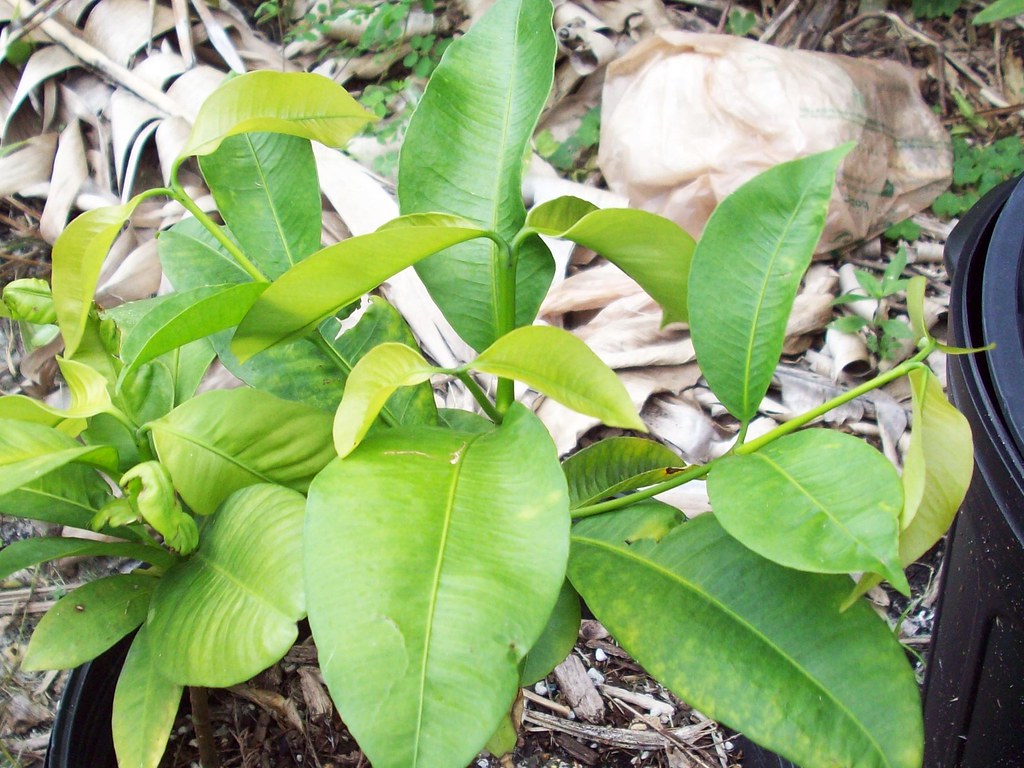

first three photos are of my small G. madruno seedlings


last two photos G. madruno fruits © Copyright Smithsonian Tropical Research Institute 2003-2006

Family: Clusiaceae •
Genus: Garcinia •
Species: madruno (Planch. & Triana) •
Country of Origin: Costa Rica, Peru •
Synonyms: Rheedia acuminata, Rheedia madruno •
Common Names: Charichuela, Madroño •

I got these seeds from Bill Whitman before he passed away. "Mr. Whitman was a founder of the Rare Fruit Council International, based in Miami, and was its first president, from 1955 to 1960. "(1) His legacy lives on with these plants and I'm sure hundreds of others. They started slow but they're taking off this year. This fruit tastes like lemony cotton-candy. It's possibly the best fruit I've ever tasted. I can't wait for it to fruit!!!!

The tree is erect, lush, compact, with pyramidal or nearly round crown, 20' to 65' high, and has much gummy yellow latex. The opposite leaves are elliptic to oblong, wedge-shaped at the base, rounded or pointed at the apex, 2 3/8" to 8" long, 3/4" to 3" wide; dark green above, paler beneath, with numerous veins conspicuous on both surfaces and merging into a thick marginal vein. The fragrant male and female flowers are borne on separate trees in clusters of up to 14 in the leaf axils; have 4 re-flexed, pale-yellow petals; the male, 25 to 30 light-yellow stamens.

The fruit is round or ellipsoidal, sometimes with a prominent nipple at each end; 2" to 3" in long, with thick, leathery, warty, greenish-yellow rind containing a deep-yellow, resinous latex. The white, translucent, juicy, sweet-acid, aromatic pulp adheres tightly to the 1 to 3 ovate or oblong seeds which are about 3/4" in long.(2)
excerpts from
(1)
http://www.nytimes.com/2007/06/04/us/04whitman.html
(2)http://www.hort.purdue.edu/newcrop/morton/bakupari_ars.html


My friend Chris Hind has some great photos of Garcinia spp. at his site here
Lets figure out the Garcinia's

last updated on 05-31-2009

Creative Commons License
Garcinia spp. by Eric Bronson is licensed under a Creative Commons Attribution-Noncommercial-No Derivative Works 3.0 United States License.
Based on a work at www.flickr.com

Garcinia spp. part 2

I did an earlier post on some of the Garcinia spp. that I'm growing. Here is another species, the tree and flowers are at the RFVC 208 garden and the fruit Murray C. gave me to try. It was tart and delicious. I haven't tasted a Garcinia spp. that I haven't liked yet! I've already planted the four seeds that came from the fruit. I hope every single one germinates. I've also added some new pictures to my earlier post (click on the link above) mainly pictures of the flowers. I wanted to add that there is a lot of confusion on many of the Garcinia spp. and with the small amount of information available it is doubtful that anyone is an expert on Garcinia spp. I spent a whole day making sure I have these properly identified. If you think I've made an error let me know. We only learn through our mistakes. Also, I'll be updating this post as my G. macrophylla seedlings grow and begins to bears it's fruits.

Garcinia macrophylla

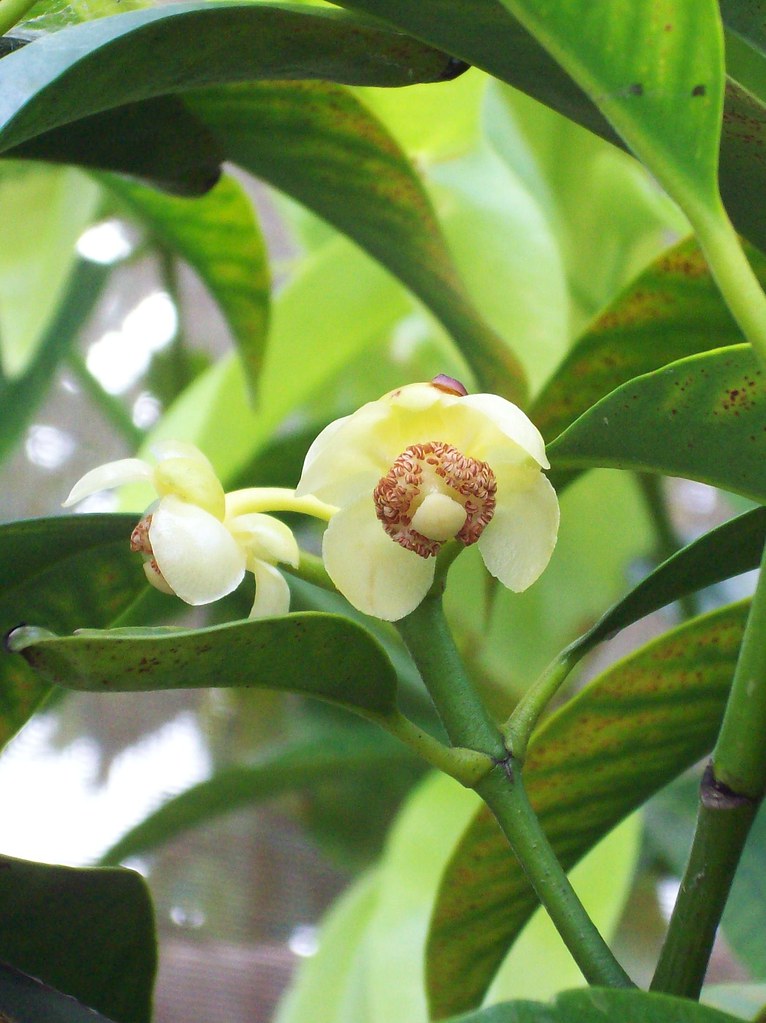
first two photos G. macrophylla flowers @ RFVC 208 garden

large specimen G. macrophylla @ RFVC 208 garden


G. macrophylla fruits @ 208 garden

Family: Clusiaceae •
Genus: Garcinia •
Species: macrophylla (Mart.) •
Country of Origin: South America •
Synonyms: Garcinia gardneriana, Rheedia benthamiana, Rheedia gardneriana, Rheedia macrophylla •
Common Names: Bacuriparí •

The Bacuriparí is native to the Amazonian lowlands, where it grows as an understory tree. The tree can grow to 30', forming an attractive, pyramidal canopy (Campbell 1983). Trees are propagated by seed and may require 7 to 10 years to come into production. Fruit are variable in shape, averaging 1 1/2" to 2" in diameter and 2" to 2 1/2" in length. The fruit have a thick, hard outer wall containing a bitter latex, as in bacurí. Inside the hard shell is a white, creamy flesh surrounding 3 to 4 large seeds. The flesh is scanty in comparison to Mangosteen or Bacurí. The Bacuriparí is outstanding because it grows and produces a significant crop in shaded conditions (Campbell 1983). The trees are also tolerant of full sun and wind exposure, making them more adaptable to varied climates than the Mangosteen. There is considerable variation in fruit quality among Bacuriparí from different regions of South America, and there may be different species involved.
excerpt from http://www.hort.purdue.edu/newcrop/proceedings1996/V3-431.html#Guttiferae

The tree is native to humid forests of Surinam and Brazil to northern Peru. The fruit is not much esteemed but widely eaten and sold in native markets. The bacuripari was introduced into Florida in 1962 and planted at the Agricultural Research and Education Center in Homestead, at Fairchild Tropical Garden and in several private gardens. One tree fruited in 1970, another in 1972, and the latter has continued to bear. Young specimens have been killed by drops in temperature to 29º to 30º F (-1.67º--1.11º C). Older trees have been little harmed by 27º to 28º F (-2.78º--2.22º C). The tree is accustomed to light-to moderate-shade. Seeds have remained viable for 2 to 3 weeks but require several weeks to germinate.

In Brazil, the tree blooms from August to November and the fruits mature from December to May. In Florida, flowers appear in April and May and a second time in August and September, and the fruits are in season from May to August and again in October and November. Some 15-to 20-year-old trees have produced 100 to 200 fruits when there have been no adverse weather conditions.
excerpt from http://www.hort.purdue.edu/newcrop/morton/bakupari_ars.html

Creative Commons License
Garcinia spp. part 2 by Eric Bronson is licensed under a Creative Commons Attribution-Noncommercial-No Derivative Works 3.0 United States License.
Based on a work at www.flickr.com

Rare Fruit & Vegetable Council of Broward County (part 2)

Here is part 2 of my RFVC of Broward post. More tropical fruits, alot more photos and info about each species. In case you missed the first post you can read it here http://ilikerareplants.blogspot.com/2008/11/rare-fruit-vegetable-council-of-broward.html

Orange Berry

Family: Rutaceae •
Genus: Glycosmis •
Species: trifoliata •
Country of Origin: Australia •
Common Names: Orange Berry, Gin Berry •

This was my favorite find of the day, it's called Orange Berry even though the berries aren't orange nor do they taste like an orange. It is in the same family as citrus, though. Actually the fruit tasted more like honey and gin. I really enjoyed the taste, sweet and aromatic. What info I could find on this species says that it can start bearing fruit when it reaches 2 feet high. It is a small shrubby tree that can grow to 15 feet high. The pink berries and glossy foliage make this a must have. One site reports that "The stems are reported to be largely used as toothbrushes in eastern Bengal on account of their fibrous nature and slightly astringent, bitter taste. Their constant use is said not only to clean teeth but also to keep them strong." [1]

*no reliable food value available


Mangosteen

Family: Clusiaceae •
Genus: Garcinia •
Species: mangostana •
Country of Origin: Malay Archipelago •
Common Names: Mangosteen, Mangostan •

This is a slow growing tree that can reach 20 to 80 feet depending on the growing conditions. The Mangosteen is ultra-tropical. It cannot tolerate temperatures below 40ºf. It's called the "queen of fruits". Although, I've had it before and I wouldn't call it the "queen of fruits". Don't get me wrong, it is way better than the average fruits I've grown up with. Just not as good as some of the fruits I've tasted at the RFVC. It is esteemed in most parts of the world but relative unknown until recently. Now every "snake oil salesman" claims their miracle juice contains Mangosteen. Seriously though, our government needs to do more to allow imports of these great tropical fruits! I'd love to have a bag of Mangosteens on my table instead of apples. This is one of only a handful of trees growing in the United States.
Food Value Per 100 g of Edible Portion*
Calories 60-63
Moisture 80.2-84.9 g
Protein 0.50-0.60 g
Fat 0.1-0.6 g
Total Carbohydrates 14.3-15.6 g
Total Sugars 16.42-16.82 g
(sucrose, glucose and fructose)
Fiber 5.0-5.1 g
Ash 0.2-0.23 g
Calcium 0.01-8.0 mg
Phosphorus 0.02-12.0 mg
Iron 0.20-0.80 mg
Thiamine 0.03 mg
Ascorbic Acid 1.0-2.0 mg


Monkey Pot

Family: Lecythidaceae •
Genus: Lecythis •
Species: sp. (elliptica?) •
Country of Origin: Brazil •
Common Names: Monkey Pot, Paradise Nut, Cream Nut •

Native to Brazil. This is one of the smaller species, though I'm not sure which one possibly L. elliptica? Murray C. was saying that natives use the shells to trap monkeys! I hear that this nut is comparable or better than a Brazil nut. It would be cool to grow just for the interesting fruit as far as I'm concerned!

*no reliable food value available


Pereskia bleo


Family: Cactaceae •
Genus: Pereskia •
Species: bleo •
Country of Origin: Tropical America •
Common Names: Rose Cactus, Wax Rose •

This and the following species are unlike most other cacti because they have true leaves. They also have really unusual fruits and each species is unique. This species can grow up to 9 feet tall and has amazing red rose like flowers. The fruits are oddly shaped you can see them here http://toptropicals.com/catalog/uid/perescia_bleo.htm

*no reliable food value available

Barbados gooseberry

Family: Cactaceae •
Genus: Pereskia •
Species: aculeata •
Country of Origin: Tropical America •
Common Names: Barbados Gooseberry •

This fruit is just as odd. It is a yellow marble sized berry with calyx remnants sticking out of the fruit. They are easily wiped off and the fruit is said to be slightly sour and very tasty. This plant can reach up to 33 feet according to 'Fruits of Warm Climates'.
Food Value Per 100 g of Edible Portion

Fruit Leaves
Moisture 91.4 g
Protein 1.0 g
Fat 0.7 g 6.8-11.7 g
Carbohydrates 6.3 g
Fiber 0.7 g 9.1-9.6 g
Ash 0.6 g 20.1-21.7 g
Calcium 174 mg 2.8-3.4 mg
Phosphorus 26 mg 1.8-2.0 mg
Iron Trace
Vitamin A 3,215 I.U.
Thiamine 0.03 mg
Riboflavin 0.03 mg
Niacin 0.9 mg
Ascorbic Acid 2 mg
Magnesium
1.2-1.5 mg
Amino acid per 100 g Protein:
Arginine
5.00-5.36 g
Histidine
2.49-2.54 g
Isoleucine
3.78-4.23 g
Leucine
6.99-8.03 g
Lysine
5.32-5.43 g
Methionine
1.72-2.03 g
Phenylanine
5.06-5.08 g
Threonine
3.09-3.60 g
Valine
4.78-5.52 g


Mabolo
Family: Ebenaceae •
Genus: Diospyros •
Species: blancoi •
Country of Origin: •
Common Names: Mabolo, Velvet Apple •

This member of the Ebony family is a large tree that can reach 60 to 100 feet. Its fruit is furry and smells alot like Brie cheese. The experts say you can eliminate the smell by removing the skin. I thought it had a crunchy texture and the taste is sort of bland if you ask me. Granted, I haven't tasted one in three or four years. Most fruits each tree produces different tasting fruits(sometimes only slightly). It is grown as an ornamental in some places and with it's black furrowed trunk, fuzzy red fruit, and beautiful foliage it is an interesting sight!
Food Value Per 100 g of Edible Portion*

Ordinary type Seedless type
Calories
504
Moisture 77.80 g 71.95-86.04 g
Protein 0.75 g 0.82-2.79 g
Fat
0.22-0.38 g
Carbohydrates
(other) 5.49-6.12 g
Sugar 11.47 g (reducing) 6.25-18.52 g
Fiber
0.74-1.76 g
Ash 0.83 g 0.43-1.08 g
Sulphuric Acid 0.11 g
Malic Acid 0.16 g
Phytin - 3.26% (on dry basis)


Araçá-boi

Family: Myrtaceae •
Genus: Eugenia •
Species: stipitata •
Country of Origin: Brazil •
Common Names: Araçá-boi, Arazá •

This is a small tree that can reach 8 to 10 feet. It's native to Brazil. My knowledge on this plant is limited to it's country of origin. So I'll share an excerpt from (I did edit it a bit)

Neglected Crops: 1492 from a Different Perspective. 1994. J.E. Hernándo Bermejo and J. León (eds.)

"Arazá is used to make juices, soft drinks, ice-cream, preserves and desserts. The fruit is rarely eaten raw because of its acidity (pH 2.4 in the case of the juice). Unlike Camu Camu (Myrciaria dubia), more than 20 percent of the fruits fresh weight is represented by 2 percent of ascorbic acid. Arazá's potential is due to its intrinsic characteristics as a fruit: pleasant flavor, color, texture and smell. The nutritional value of Arazá is very similar to oranges, with the exception of the vitamin C content is more than double in Arazá". [2]

*no reliable food value available


Barbados Cherry
Family: Malpighiaceae •
Genus: Malpighia •
Species: glabra •
Country of Origin: Lesser Antilles •
Common Names: Barbados Cherry, Acerola •

This is a small tree that can reach 20 feet. It has beautiful little flowers followed by a tart and tasty fruit. This has been touted as a wonder fruit by many because it has one of the highest levels of vitamin c in any fruit containing 1,677 mg vitamin C per/100 grams of fruit. Only Camu Camu (Myrciaria dubia) @ 2,700 mg, Kakadu Plum (Terminalia ferdinandiana) @ 2300 to 3150 mg, and Rosehip (Rosa sp.) cv.'Vitaminnyj-VNIVI' @ 2,000 to 2,500 mg have more [3] I'd highly recommend this tree because of the beautiful flowers and fruit. I know when the RFVC has their plant sale these fly out of the nursery. It is truly a favorite of people from the Caribbean.

Food Value Per 100 g of Edible Portion*
Calories 59
Moisture 81.9-91.10 g
Protein 0.68-1.8 g
Ether Extract 0.19-0.09 g
Fiber 0.60-1.2 g
Fat 0.18-0.1 g
Carbohydrates 6.98-14.0 g
Ash 0.77-0.82 g
Calcium 8.2-34.6 mg
Phosphorus 16.2-37.5 mg
Iron 0.17-1.11 mg
Carotene 0.003-0.408 mg
(Vitamin A) 408-1000 I.U.
Thiamine 0.024-0.040 mg
Riboflavin 0.038-0.079 mg
Niacin 0.34-0.526 mg
Ascorbic Acid**


Taro Black Variety

Family: Araceae •
Genus: Colocasia •
Species: esculenta •
Country of Origin: Malaysia •
Common Names: Black Taro, Dasheen, Arrow Root •

This may be the hybrid 'Black Magic' I'm not sure. This is in the aroid family which includes Anthurium's and Peace Lily's just to name a few. This is what Hawaiians use to make poi.

Taro is a tropical plant grown primarily as a vegetable food for its edible corm, and secondarily as a leaf vegetable. It is considered a staple in oceanic cultures. It is believed to be one of the earliest cultivated plants. In its raw form the plant is toxic due to the presence of calcium oxalate, although the toxin is destroyed by cooking or it can be removed by steeping taro roots in cold water overnight. [4]

It's also considered an invasive species in Florida. All parts of taro can cause stomach aches if ingested without cooking. Contact with the sap can irritate sensitive skin. [5]

*no reliable food value available

Ceriman
Family: Araceae •
Genus: Monstera •
Species: deliciosa •
Country of Origin: •
Common Names: Ceriman •

This is another aroid that is grown as an ornamental and most people don't realize that the fruit is edible. The spadix turns into a green compound fruit that becomes edible once the "scales" become loose. 'Fruits of Warm Climates' says "the fully ripe pulp is like a blend of pineapple and banana" I haven't tasted this fruit yet. Looks like my opportunity will be coming soon!!!

*no reliable food value available

[1] http://users.kymp.net/citruspages/distantrelatives.html#glycosmis
[2] http://www.hort.purdue.edu/newcrop/1492/myrtaceae.html#Araza
[3]
http://www.naturalhub.com/natural_food_guide_fruit_vitamin_c
[4] htm http://en.wikipedia.org/wiki/Taro
[5] http://www.floridata.com/ref/C/colo_esc.cfm


Creative Commons License
Rare Fruit & Vegetable Council of Broward County (part 2) by Eric Bronson is licensed under a Creative Commons Attribution-Noncommercial-No Derivative Works 3.0 United States License.
Based on a work at www.flickr.com