Showing posts with label tropical fruits. Show all posts

Sundy House


Above is the amazing natural pool, if only I had that kind of money!!! (please click on the photos for the large view)


I went to Sundy House in Delray Beach, FL this weekend with fellow fruit enthusiasts Noel Ramos and Jeff & Maria Hagen. Sundy House is a neat little Bed and Breakfast type inn with an amazing collection of tropical fruit trees, bamboos, heliconias, gingers, and a lot more. We were lucky to have our friend Har Mahdeem (Horticulture & Aquatics Manager) give is a tour of the of the property before he started his work day. We toured the grounds and he showed us Sundy House's mature fruiting rare fruit trees, Jackfruit 'Lemon Crunch', Kwai Muk, Ilama, et al. and explained how they came to have all these mature trees on the property. When they built the B&B they searched all over the tri-county area for large specimen trees, then purchased and moved them to Sundy House. They even had to move all the lights on Swinton Ave to get one large tree onto the property. He also told me a little about the history of Sundy House. Sundy House was built in 1902 by John & Elizabeth Shaw and is listed on the National Register of Historic Places. It also has Florida’s only freshwater swimming pond, it uses a bio filter (here's a useful link I don't know which product Sundy House uses. http://www.totalhabitat.com/P&P.html) to clean the water, really an amazing feature. I didn't get to see any of the accommodations or eat in the restaurant, but in the course of my research I have seen it get rave reviews and I would highly recommend seeing the gardens, truly a hidden treasure! Take the time to check it out if you get a chance. Here's some photos I took, as well as the ones of the pool above.


Pictures of one of fruits on their two Ilama (Annona diversifolia) trees.


Humongous Jackfruit (Artocarpus heterophyllus) 'Lemon Crunch' cultivar


Bambusa sp.


Bambusa sp.

Me being a clown with a very large species of bamboo

Close up of the same species as above.


Bambusa sp.

Creative Commons License
Sundy House by Eric Bronson is licensed under a Creative Commons Attribution-Noncommercial-No Derivative Works 3.0 United States License.
Based on a work at www.flickr.com

Cacti Fruits & Flowers

Here are photos of four edible cacti. Each species is unique. Most are native to Central and South America. They make good additions to a tropical, desert or xeriscape garden. They can be propagated by either seed or cuttings, the latter being a quicker way to have a large fruiting specimen. Best of all they all produce delicious fruits.

Cereus repandus
Cereus repandus fruit

Family: Cactaceae •
Genus:
Cereus •
Species:
repandus •
Country of Origin: Peru •
Common Names: Peruvian Apple Cactus,
Club Cactus
•

This fruit was sweet like sugar cane and refreshing sort of like having a drink of water. The edible flesh is white and contains small, edible, crunchy seeds. This is a beautiful columnar cacti up to 30' tall and it is commonly grown as ornamental. The flowers are white, large (6" in diameter) and release an intoxicatingly, heavenly fragrance at night. Here's an amazing photo of the flower.
Cereus repandus flower
Photo by T. McGovern (http://www.flickr.com/people/residualsignal/) original photo @ http://www.flickr.com/photos/residualsignal/891882091/ © 2009 All Rights Reserved


This plant likes to be watered but it needs excellent drainage so a sandy type soil would be best. It will thrive in full or partial sun. The sad news is this species is endangered in it's native habitat. (http://www.cites.org/eng/app/appendices.shtml)

Hylocereus undatus
Hylocereus undatus immature fruit

Hylocereus undatus fruit

Family: Cactaceae •
Genus: Hylocereus •
Species: undatus •
Country of Origin: Mexico •
Common Names: Dragon Fruit, Pitaya, Pitahaya •


This is a vining, terrestrial or epiphytic cactus that can grow up to 20' and they can quickly spread through an entire tree. It has night blooming fragrant flower that lasts only one night much like the Cereus repandus. Here's a beautiful picture of the flower.

Hylocereus undatus flower
Photo by Alonso Salazar Garibay
(http://www.flickr.com/people/asac-cactus/) original photo @ http://www.flickr.com/photos/asac-cactus/3666066260/ © 2009 All Rights Reserved

Hylocereus stenopterus flower
Photo by Warren Condon (note: this is Hylocereus stenopterus which has unusual pink flowers.)© 2009 All Rights Reserved


This delicious fruit is usually eaten right out-of-hand especially if chilled and cut in half so that the flesh can be eaten with a spoon and, it is considered the best of all cacti fruits. The unopened flower bud can be cooked and eaten as a vegetable. I have a nice cutting growing that I received from Bill Whitman, on the east wall of my house. It has really taken off this year I can't wait for my first fruit!!!! This is a tropical plant although it will tolerate light frost. It will grow in most soil types and will thrive when grown in a medium enriched with organic matter. Full to partial sun for optimal fruiting.

Pereskia aculeata
Pereskia aculeata flower

Family: Cactaceae
•
Genus:
Pereskia •
Species:
aculeata •
Country of Origin:
West Indies
•
Common Names: Barbados Gooseberry,
Grosellero •

This is the beautiful flower of a Barbados Gooseberry. To some people, the flowers are lemon-scented; others say sweet and pungent in odor. This is a scrambling vine that can grow up to 30' in a tree, a lot less though typically in cultivation. The fruit is a yellow to orange berry 2 cm in diameter, edible, containing numerous small seeds. The fruits also have remnants of the calyx on them & sometimes through them as well. When they are fully ripe they easily brush off which gives you an easy way to know when they are ready to eat. Here is a great photo where you can see the calyx growing right through the fruit.

Pereskia aculeata fruit
Photo by Jim West (http://www.flickr.com/people/guaycuyacu/) original photo @ http://www.flickr.com/photos/guaycuyacu/2656478822/© 2009 All Rights Reserved

They are sour but tasty!!! This is truly a unique cacti it belongs to a genus of unusual cacti with spiny non-succulent stems and large leaves. One of the few cacti that still use leaves for photosynthesis. I've started some from seeds they are growing like weeds. Flourishing with little or no care, the plant is drought-tolerant and suffers from over-watering.

Pereskia bleo

Pereskia bleo stem & leaves very unusual for cacti!

Pereskia bleo unopened flower
Pereskia bleo (left) & Pereskia aculeata (right) fruit.

Pereskia bleo fruit.

Family: Cactaceae •
Genus: Pereskia •
Species: bleo •
Country of Origin: Tropical America •
Common Names: Rose Cactus, Wax Rose •


This genus is unlike most other cacti because they have true leaves. Pereskia has now been determined to be the ancestral genus from which all other cacti evolved. This species can grow up to 9 feet tall and has amazing red, rose like flowers. The fruits are oddly shaped as you can see above. Sour and mucilaginous, but I found them tasty!

update 07-22-2009: I just added some new beautiful photos after getting proper permission to use them.

Creative Commons License
Cacti Fruits & Flowers by Eric Bronson is licensed under a Creative Commons Attribution-Noncommercial-No Derivative Works 3.0 United States License.
Based on a work at www.flickr.com

'Keitt' Mango Chutney


So I made and canned some mango chutney this week, it's a good way to use up the surplus I have. I used Keitt mangoes from my neighbors tree. They are a good mango for chutney because of their firm nature. The recipe I used is from the book 'Ft Lauderdale Recipes' which is a reprint from the 60's that the Ft. Lauderdale Historical Society published. I canned the mango chutney so when mango season is over I can still get a nice mango taste. Finding canning jars down here in South Florida was a challenge in it's self, I looked everywhere and finally found them at the third Publix I went to. I wanted to share this great recipe I used naturally I embellished it slightly as I always do with recipes to suite my personal taste.

Mango Chutney (10 pints) (original recipe by Mrs. Henry O. Patton)
2 cups vinegar
6 cups sugar
2 quarts peeled or cubed mangoes ripe but firm
4 chili peppers(I used a habanero)
1/2 cup chopped green ginger root(I only had ground)
2 cloves of garlic
2 large onions, sliced
3 cups seedless raisins
1/2 teaspoon grated nutmeg
1 teaspoon salt
1/2 pound slivered almonds(I omitted these)
juice of 2 medium sized limes

1. In large kettle boil vinegar and sugar for about 5 minutes. Add all other ingredients and simmer for about one hour or until fruit is tender.
2. Spoon into hot sterilized jars and seal.
3. Put sealed jars in a canner with 1 inch of water covering the jars, bring to a boil and process for at least 20 minutes(and no more than 30 minutes) Adjust times for higher altitudes here's a great link with processing times, recipes and more http://www.freshpreserving.com/
4. Remove jars and cool in a draft free area, check seals after a few hours and jars that don't seal should be immediately refrigerated.
5. This chutney can be used on chicken or pork especially my favorite Jamaican Jerk Pork it's sweetness compliments the spicy pork perfectly. Here's more photo's of the process


1. Cooking the chutney.

2. After a thorough hand wash with hot water and soap. Keep the jars warm until time to fill it helps soften the seals too (about a half hour before filling).

3. Six out of six all of my jars sealed properly I've been 100% so far.

4. The finished product only five jars left. I gave one away already! That's the green mango chutney I made earlier in the year on the left.


Creative Commons License
'Keitt' Mango Chutney by Eric Bronson is licensed under a Creative Commons Attribution-Noncommercial-No Derivative Works 3.0 United States License.
Based on a work at www.flickr.com

Garcinia spp.

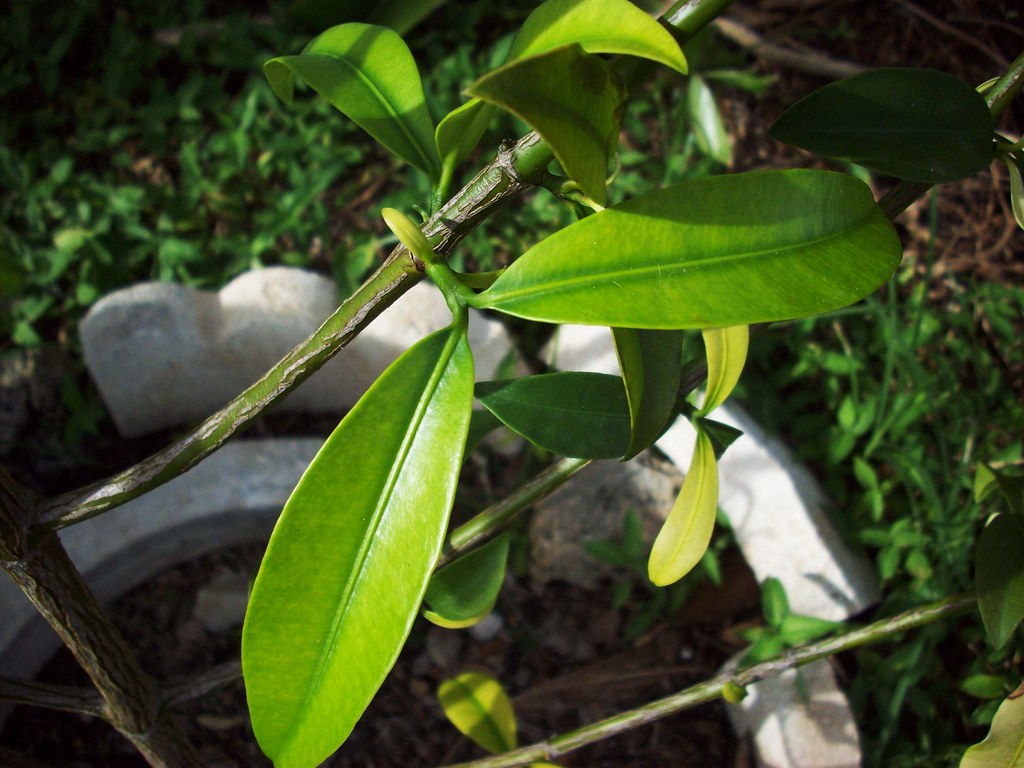
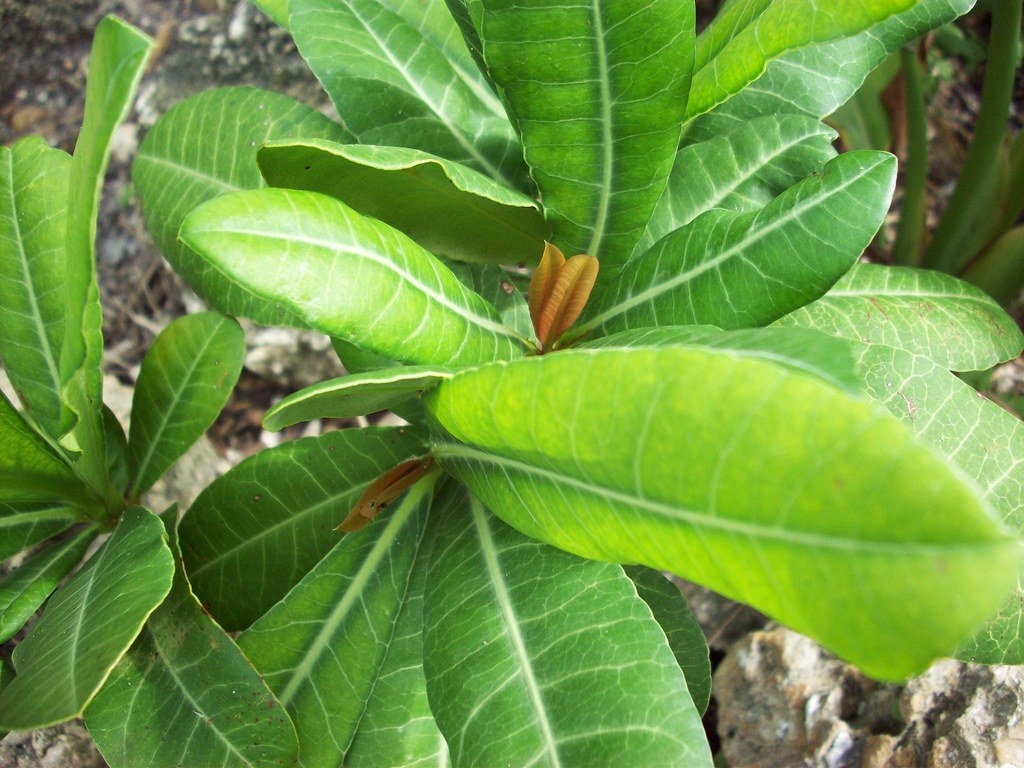
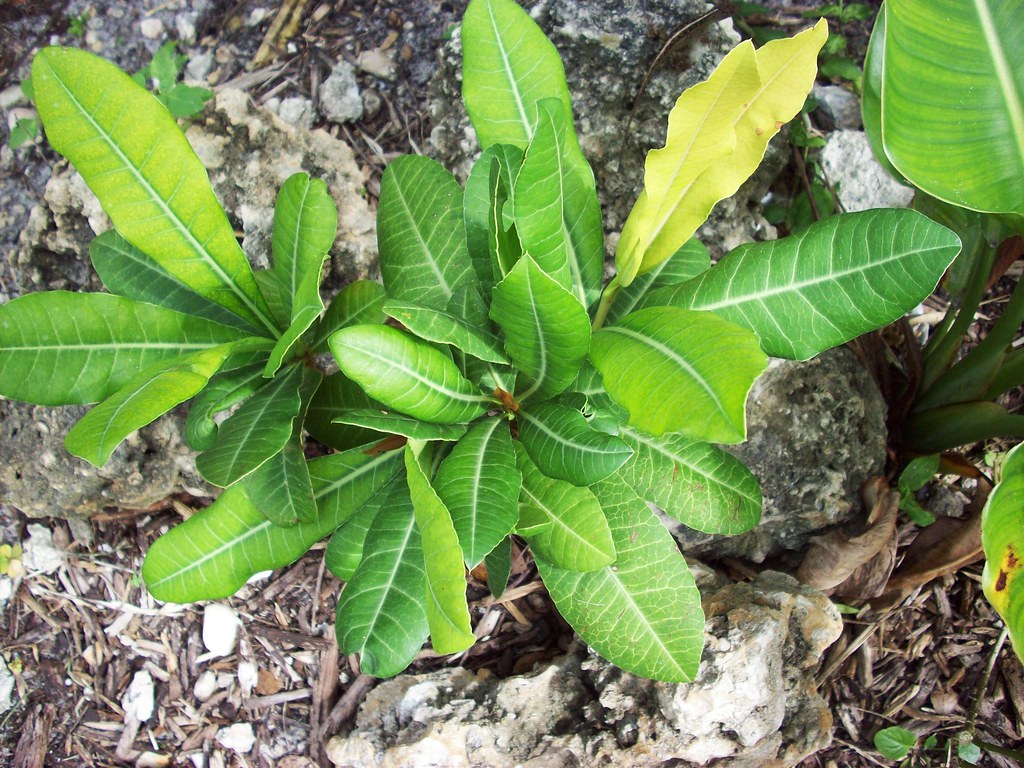
Garcinia intermedia

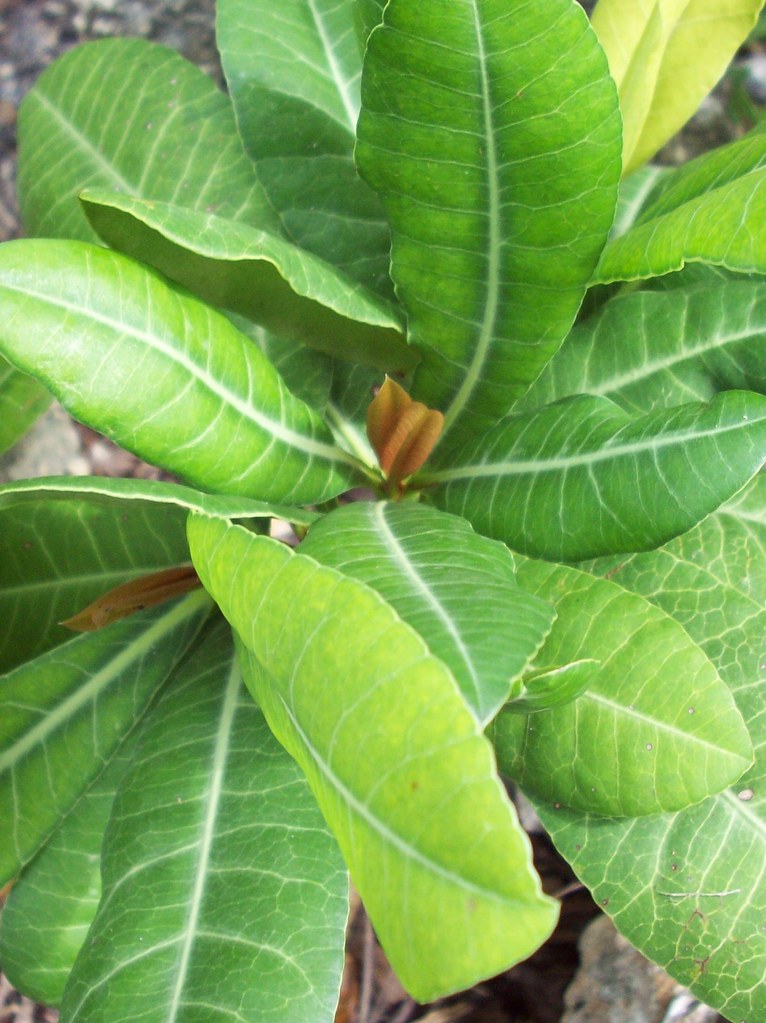
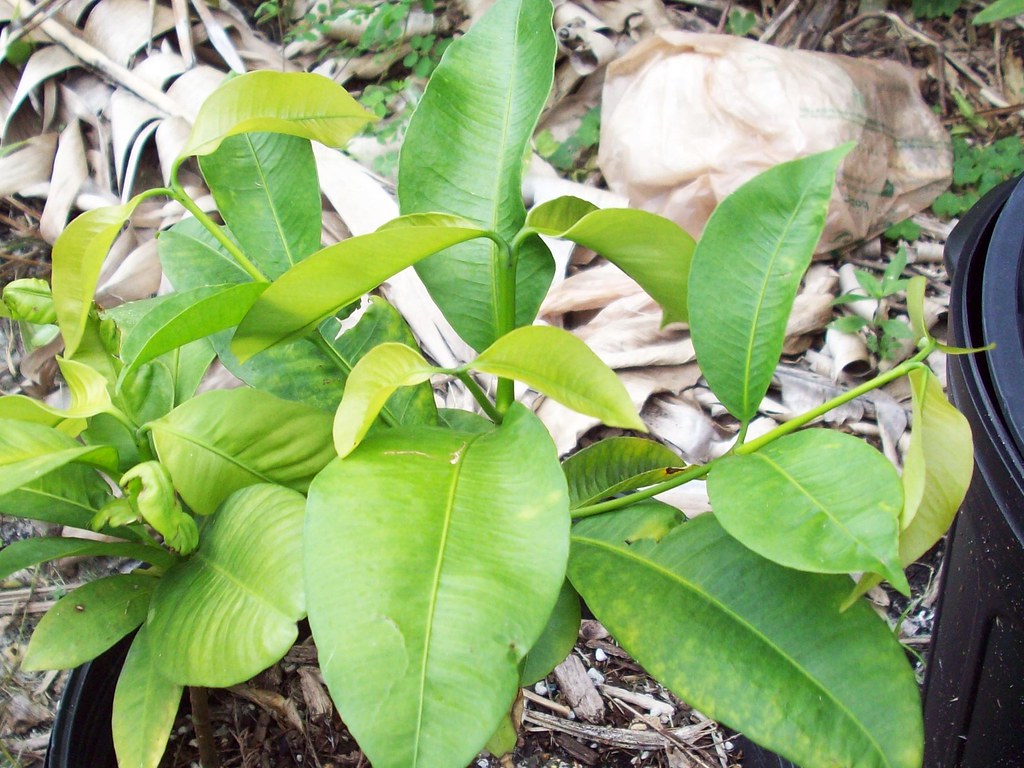
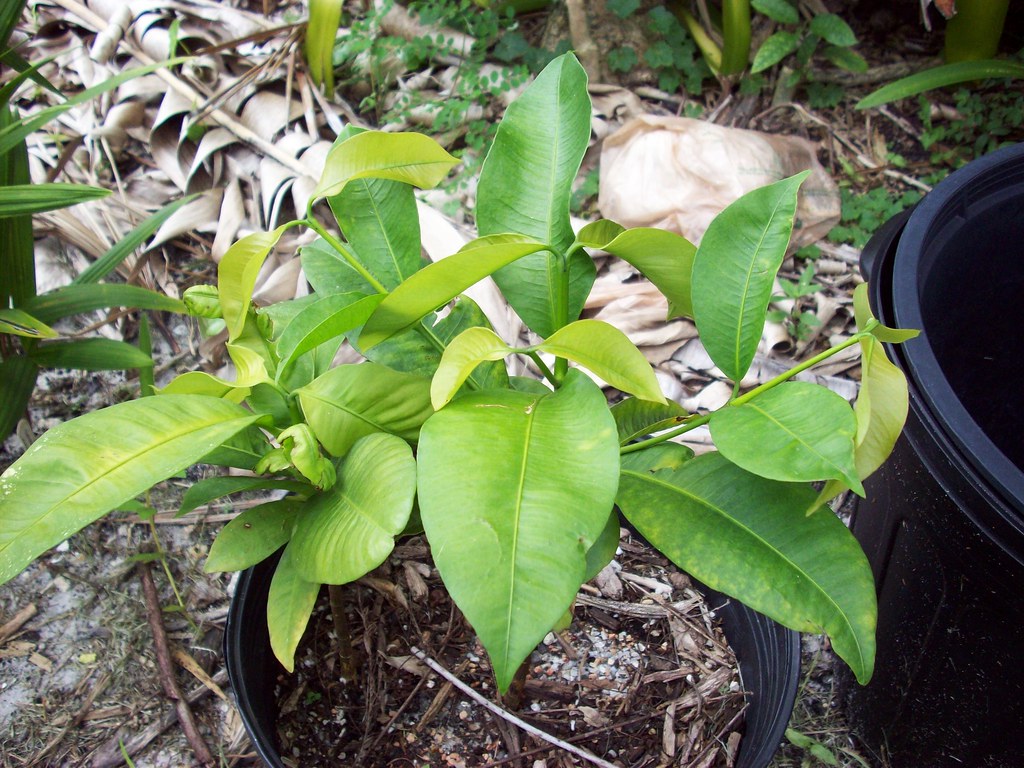
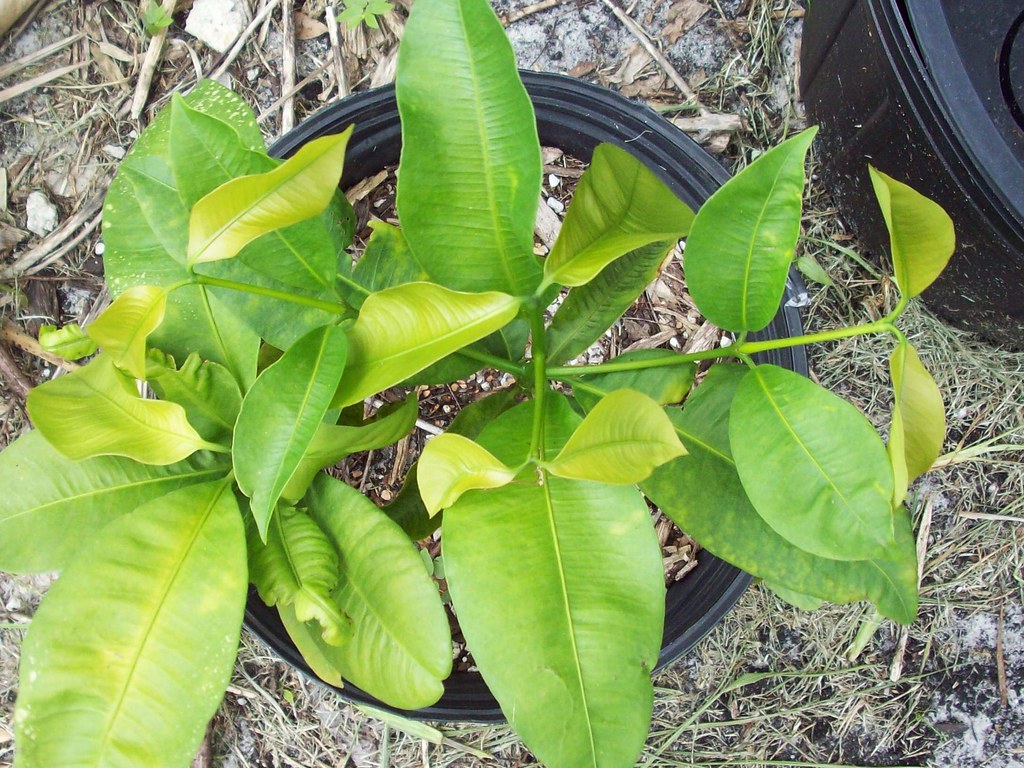
first two photos are of my G. intermedia seedling

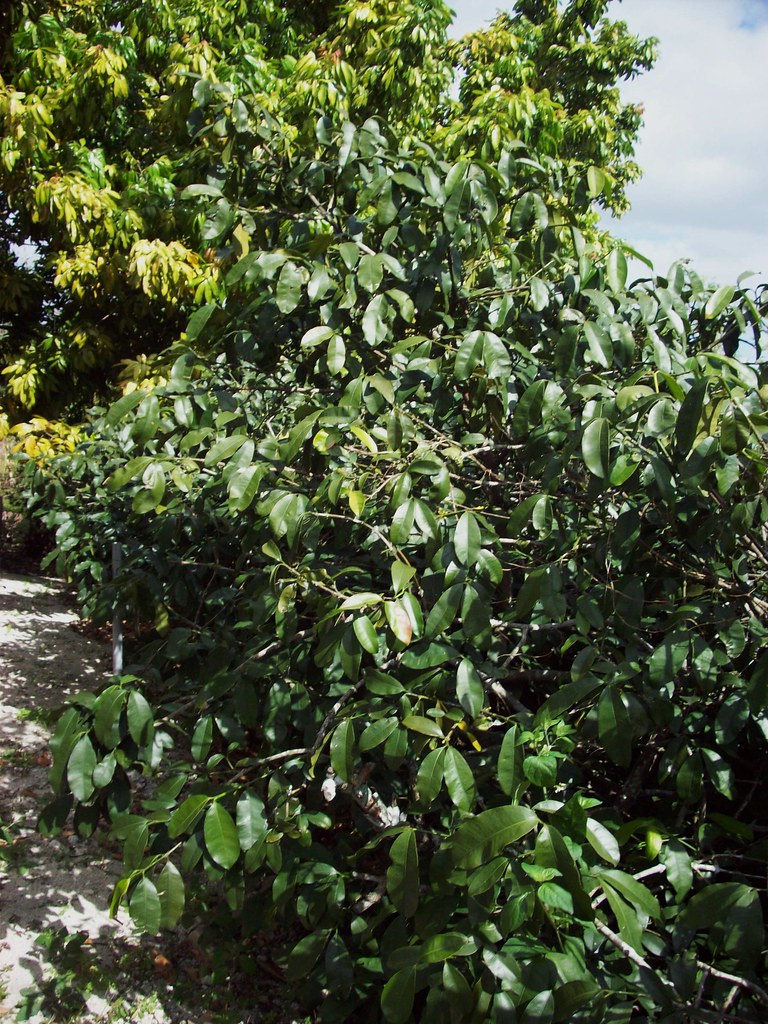
large shrub-like specimen G. intermedia @ the RFVC 208 garden

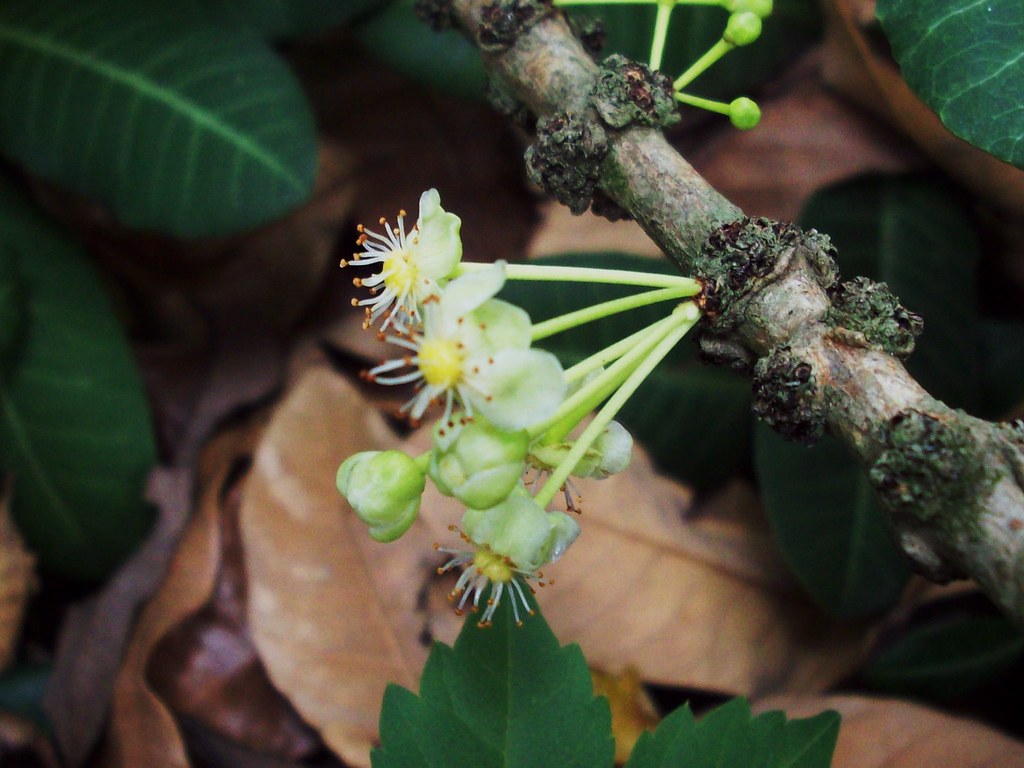
female? (not a 100% on this) flowers of G. intermedia @ the RFVC 208 garden


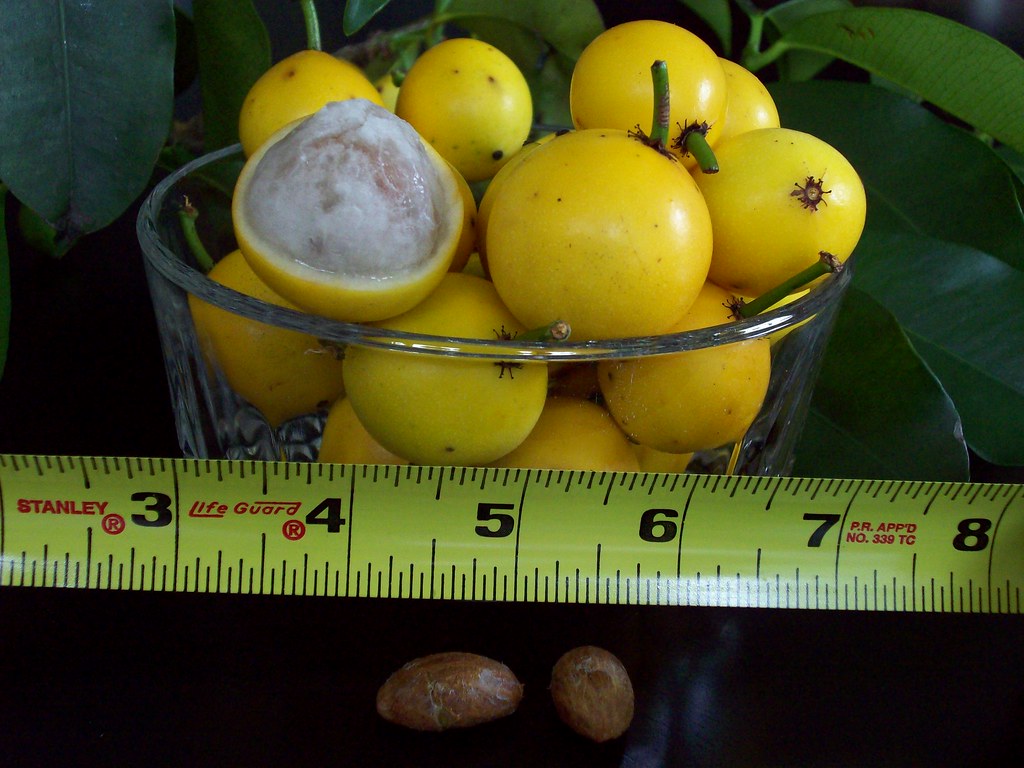
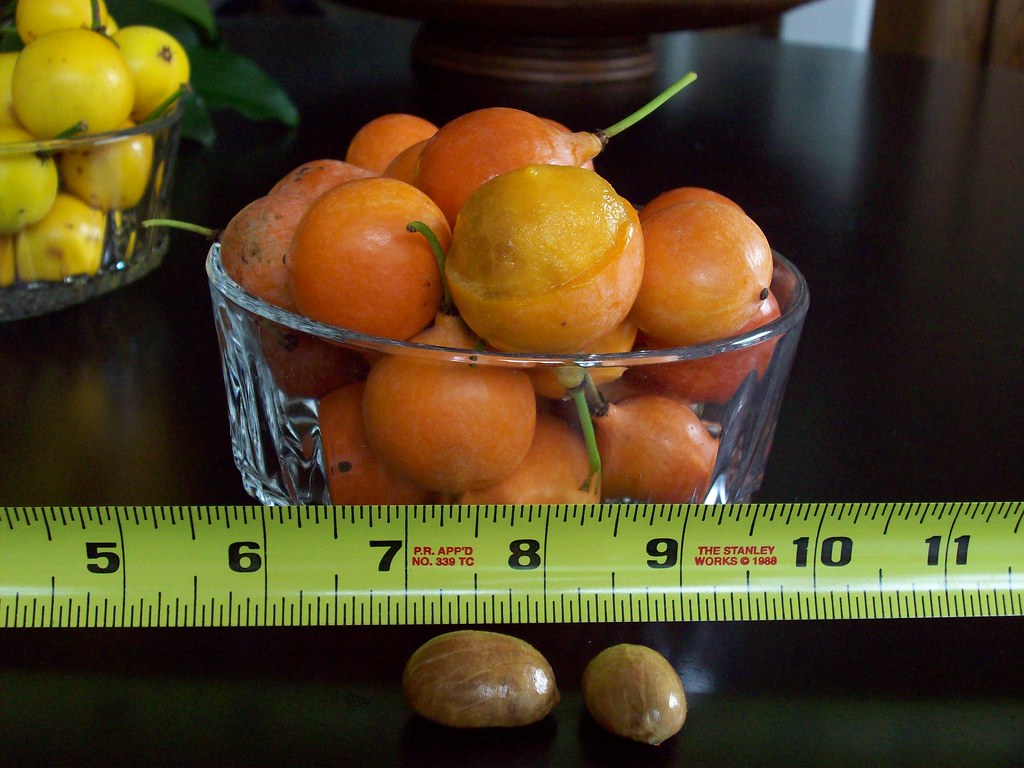
G. intermedia fruits, seeds & leaves.

Family: Clusiaceae •
Genus: Garcinia •
Species: intermedia (Pittier)Hammel •
Country of Origin: Central & South America •
Synonyms: Rheedia edulis •
Common Names: Lemon Drop Mangosteen, Mameyito •

I transplanted this last year and it has struggled every since. I feel terrible, it looks like Charlie Brown's Christmas tree! It also had a magnesium deficiency which I've since taken care of. You can see the deeper green coming back. This fruit reminds me of a childhood favorite Lemonhead™ candy. I can't wait till it fruits. It could be a while because it is not happy with me!
Update 2-16-2009 I have three more seedlings growing now!!!

The elegant, erect tree, ranging up to 100' (note from Eric: I'm not sure the ultimate height for this tree is correct as information varies, the one at the RFVC 208 garden is barely 10' high, so for now I'll stick with J. Morton, but I'd venture to say it is more like 20' or 30' high ultimately) has copious gummy, yellow latex and opposite, short-petioled, thick, leathery, elliptic-oblong or elliptic-lanceolate leaves, 3 3/16" to 6" long, 3/4" to 2" wide, or much larger, with numerous lateral veins conspicuous on both surfaces; dark-green above, pale or brownish on the underside. Young foliage is reddish. The small, greenish-white or ivory flowers, densely clustered below the leaves, are 4-petalled, the male with 25 to 30 stamens, the perfect with 10 to 12.

The fruit is oval or oblong, 3/4" to 1 1/4" long, smooth, orange or yellow, the thin, soft skin easily peeled. There is a little flesh, sweet or acid, adhering to the 1 or 2 seeds.
excerpt from http://www.hort.purdue.edu/newcrop/morton/bakupari_ars.html

Garcinia livingstonei


first three photos are of my G. livingstonei seedlings

female flowers of G. livingstonei @ the RFVC 208 garden

male flowers of G. livingstonei @ the RFVC 208 garden

G. livingstonei fruits & seeds


Family: Clusiaceae •
Genus: Garcinia •
Species: livingstonei (T. Anderson) •
Country of Origin: Africa •
Synonyms: •
Common Names: Imbe, African Mangosteen •

All these Garcinia spp. are grown from seeds. They start off real slowwwwwwwwww, but they're growing good now. Another tasty Garcinia sp. Definitely has a lemony flavor like most of these species described here.

Even without their fruits, these highly ornamental trees are good to have around. Seen in profile, they frequently divide near the ground into three or four upright, outward-curving trunks that carry short, stiff, lateral branches. They can reach 30' in height, but are normally much less. The new shoots grow in whorls (verticils) of three and emerge at an acute angle from the stem, giving the tree its characteristic asymmetry and crooked form.(1) Leaves usually 3 in a whorl (may be 4 or opposite), variable in shape but usually egg- or lance-shaped, generally 2 1/2"–4 1/2" × 1 1/4"–2 1/4" , blue-green with whitish veins, waxy. Flowers in groups of 5–15 in leaf axils on old wood, greenish, whitish or yellow, scented, male and bisexual flowers of different structure.(2)

The fruit looks like a small plum: orange in color and round or ovoid in shape but it has a point at the bottom, 3/4" to 1 1/4" long and about the same in diameter. The skin—thin, smooth, glossy, and leathery tough—separates easily from the flesh. The pulp itself is yellow and watery, with a pleasing flavor—sweet, and not unlike a perfect peach. In the center are one or two seeds which, unlike its relatives, are not reported as eaten.(1)

A traditional food plant in Africa, this little-known fruit has potential to improve nutrition, boost food security, foster rural development and support sustainable land care. It is mainly grown as an ornamental fruit, but is sometimes eaten. The juice is known for staining very badly. Mostly eaten fresh, it is also used in drinks. It can be grown in southern Florida. Both a male and female plant are needed in order to obtain fruit, although both sexes can be grafted onto the same plant to achieve the same effect.(3)
excerpts from
(1)Lost Crops of Africa Volume III
(2)http://www.plantzafrica.com/plantefg/garcinliving.htm
(3)http://en.wikipedia.org/wiki/Garcinia_livingstonei


Garcinia madruno


first three photos are of my small G. madruno seedlings


last two photos G. madruno fruits © Copyright Smithsonian Tropical Research Institute 2003-2006

Family: Clusiaceae •
Genus: Garcinia •
Species: madruno (Planch. & Triana) •
Country of Origin: Costa Rica, Peru •
Synonyms: Rheedia acuminata, Rheedia madruno •
Common Names: Charichuela, MadroƱo •

I got these seeds from Bill Whitman before he passed away. "Mr. Whitman was a founder of the Rare Fruit Council International, based in Miami, and was its first president, from 1955 to 1960. "(1) His legacy lives on with these plants and I'm sure hundreds of others. They started slow but they're taking off this year. This fruit tastes like lemony cotton-candy. It's possibly the best fruit I've ever tasted. I can't wait for it to fruit!!!!

The tree is erect, lush, compact, with pyramidal or nearly round crown, 20' to 65' high, and has much gummy yellow latex. The opposite leaves are elliptic to oblong, wedge-shaped at the base, rounded or pointed at the apex, 2 3/8" to 8" long, 3/4" to 3" wide; dark green above, paler beneath, with numerous veins conspicuous on both surfaces and merging into a thick marginal vein. The fragrant male and female flowers are borne on separate trees in clusters of up to 14 in the leaf axils; have 4 re-flexed, pale-yellow petals; the male, 25 to 30 light-yellow stamens.

The fruit is round or ellipsoidal, sometimes with a prominent nipple at each end; 2" to 3" in long, with thick, leathery, warty, greenish-yellow rind containing a deep-yellow, resinous latex. The white, translucent, juicy, sweet-acid, aromatic pulp adheres tightly to the 1 to 3 ovate or oblong seeds which are about 3/4" in long.(2)
excerpts from
(1)
http://www.nytimes.com/2007/06/04/us/04whitman.html
(2)http://www.hort.purdue.edu/newcrop/morton/bakupari_ars.html


My friend Chris Hind has some great photos of Garcinia spp. at his site here
Lets figure out the Garcinia's

last updated on 05-31-2009

Creative Commons License
Garcinia spp. by Eric Bronson is licensed under a Creative Commons Attribution-Noncommercial-No Derivative Works 3.0 United States License.
Based on a work at www.flickr.com